Transhumant Garden
- stones that migrate, landscapes that remember -
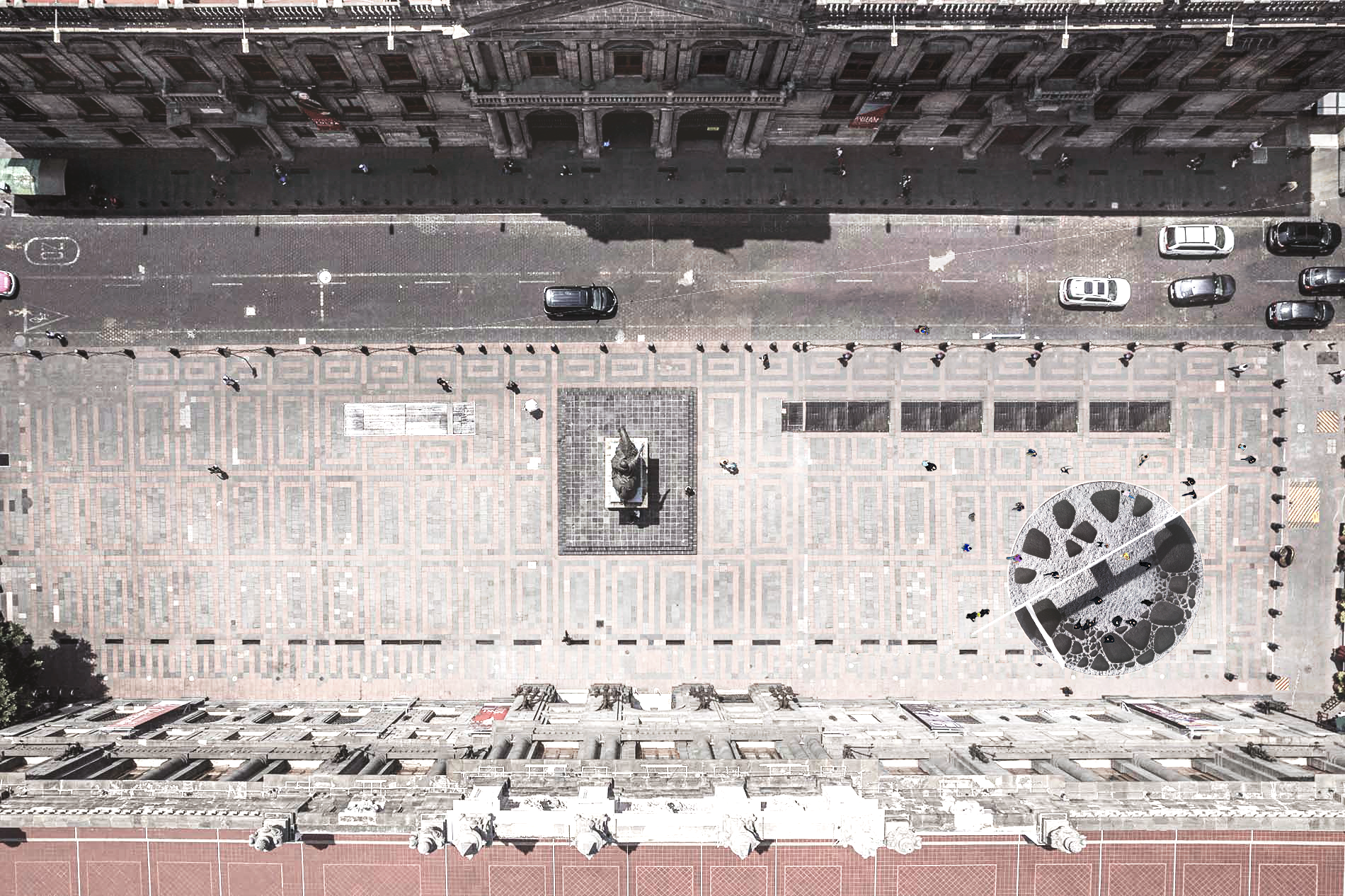
Location: Alameda Central, Mexico City, Mexico
Type: Entry for Arquine Competition No.28 | MEXTROPOLI Pavilion 2026
Medium: Volcanic tezontle, black basalt, steel structure, OSB panel, cold-rolled sheet metal
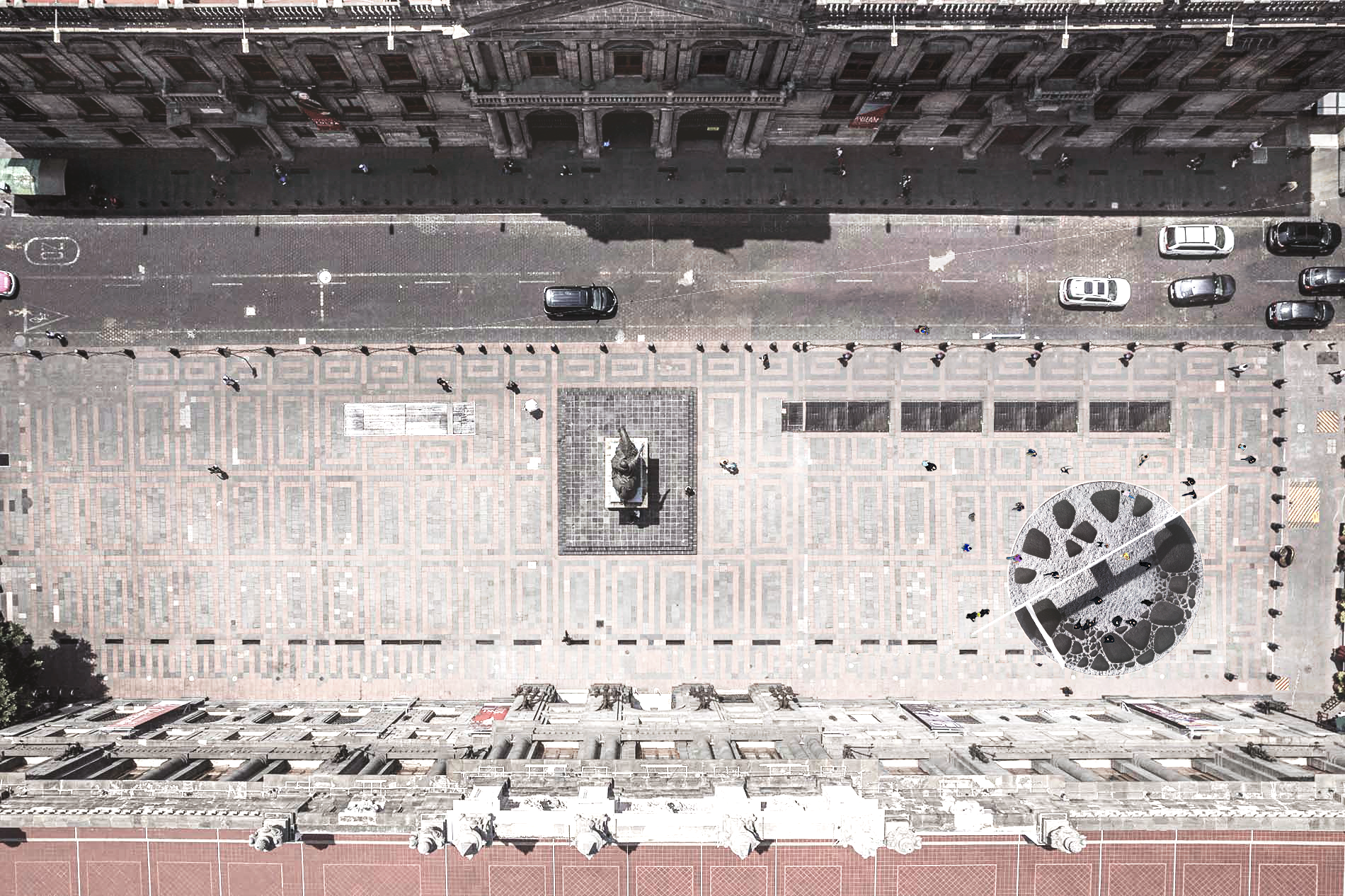
Description: A transported fragment of volcanic landscape installed in the historic heart of the city
Completion: April 2026
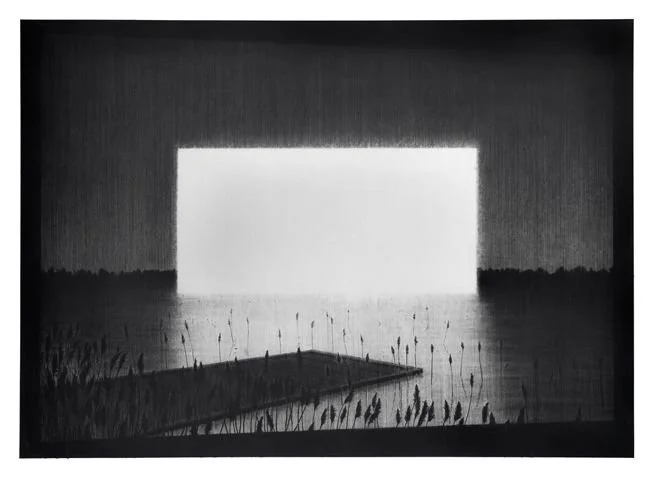
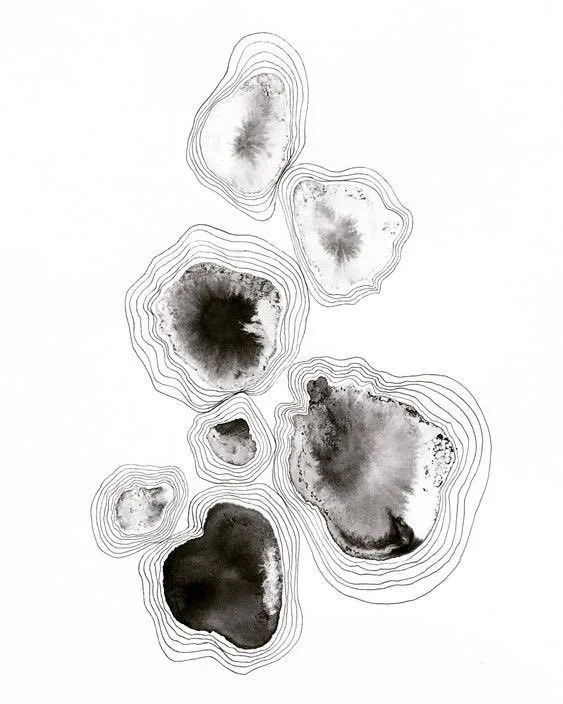
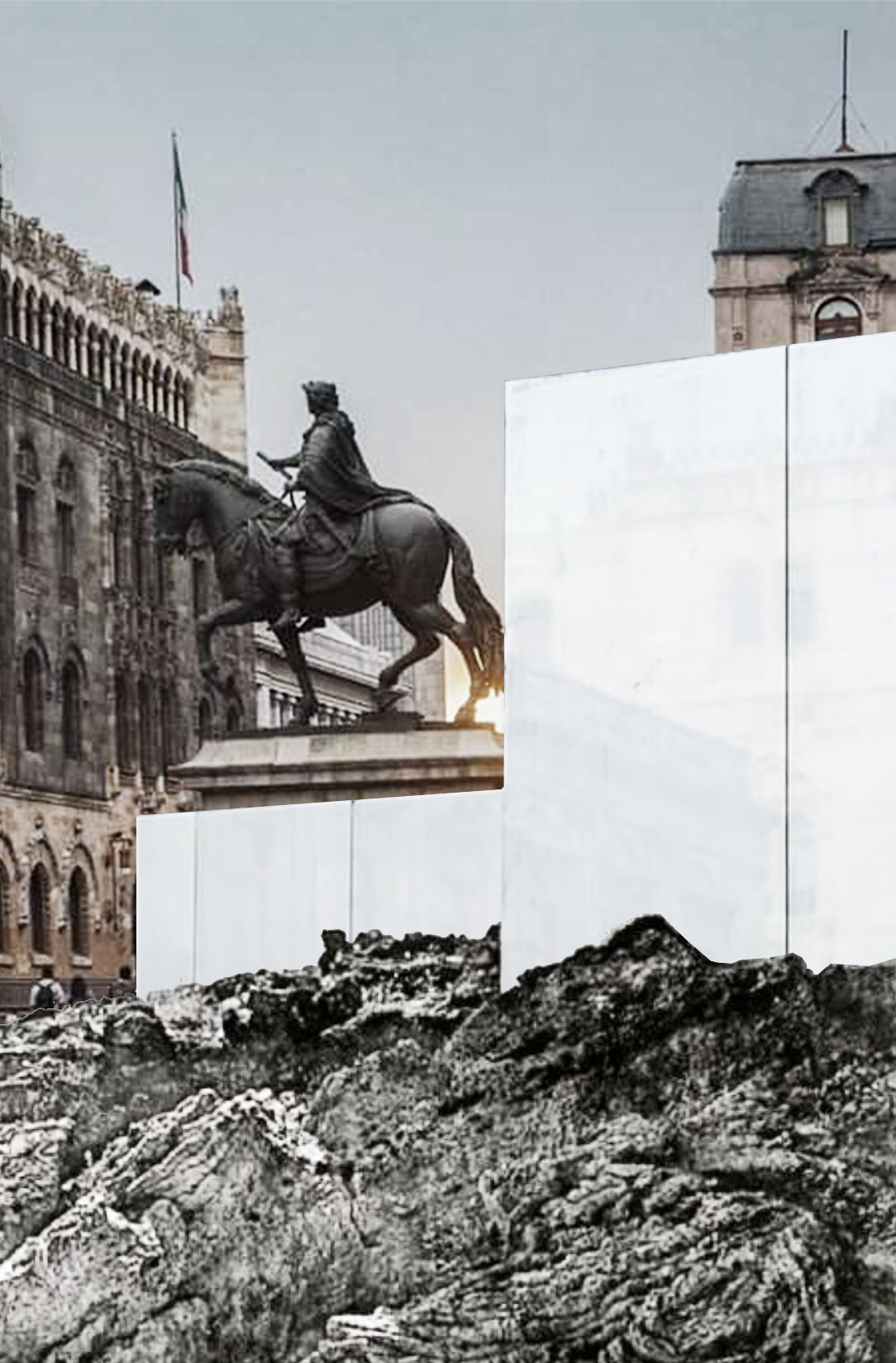
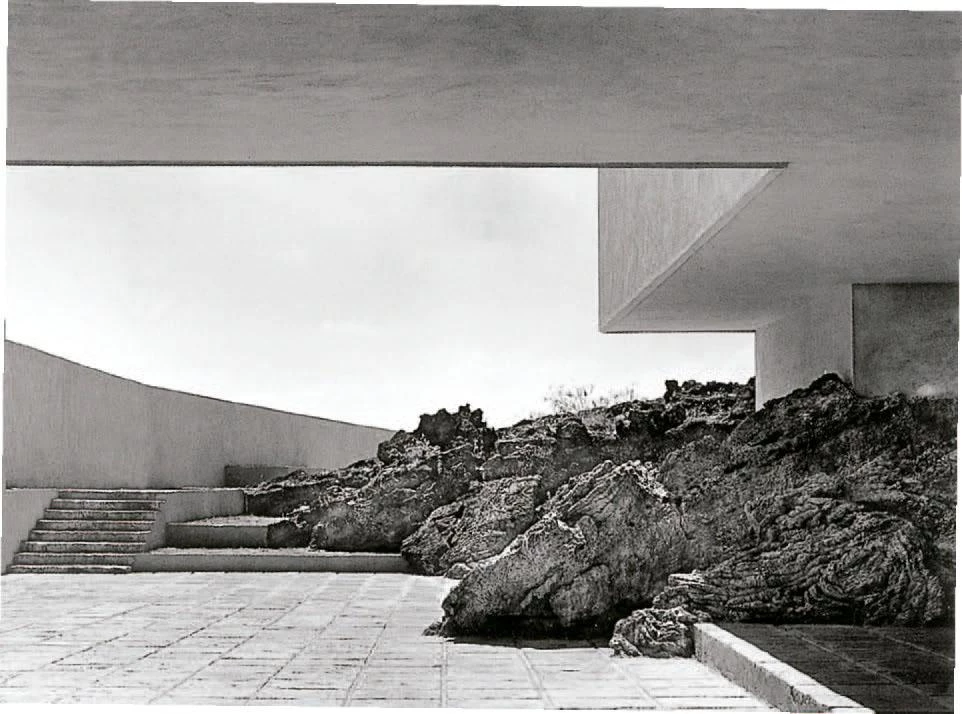
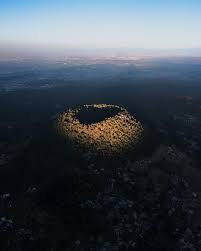
IDEA | Tezontle is not a material — it is solidified memory. Born from the Xitle volcano that buried Cuicuilco two thousand years ago, this stone unknowingly became the foundation on which Mexico City was built. It traveled from the earth's core to become the bedrock of civilizations, intuited by Juan O'Gorman in the volcanic walls of the Pedregal and elevated into aesthetic language by Luis Barragán, who made it vibrate between light and shadow. Transhumant Garden proposes a pavilion composed of masses of black tezontle — raw, porous, light, absorbent — arranged in groupings that refuse to become walls and instead become geography. The volcanic south arriving at the historic heart of the city.
CONCEPT | The piece reflects on movement as a permanent condition. Stones that appear motionless have traveled from the earth's interior to the surface, carried by centuries of urban history, construction, and demolition. Trashumar — a word that belongs to shepherds and their flocks — is applied here to the mineral world. Rocks that migrate, that change place, that find new contexts without losing their origin. At a moment when human migration is debated through fear, the pavilion reminds us that movement is the originary condition of all matter. Even stones migrate. And when they arrive, they change the place.
CIRCULARITY OF MATERIALS | The project is structured around a regenerative material cycle — from extraction to temporary use and back into constructive cycles. Black volcanic tezontle and raw basalt are sourced without processing, preserving their quarry face and live edges. The steel frame uses standard A-36 profiles assembled without permanent connections. The OSB substrate is modular and fully demountable. The base layer protects the historic paving beneath with recycled SBR rubber, leaving no trace. Every component is designed to be disassembled, redistributed, and reintegrated into future construction — the pavilion itself performing the transhumance it describes.
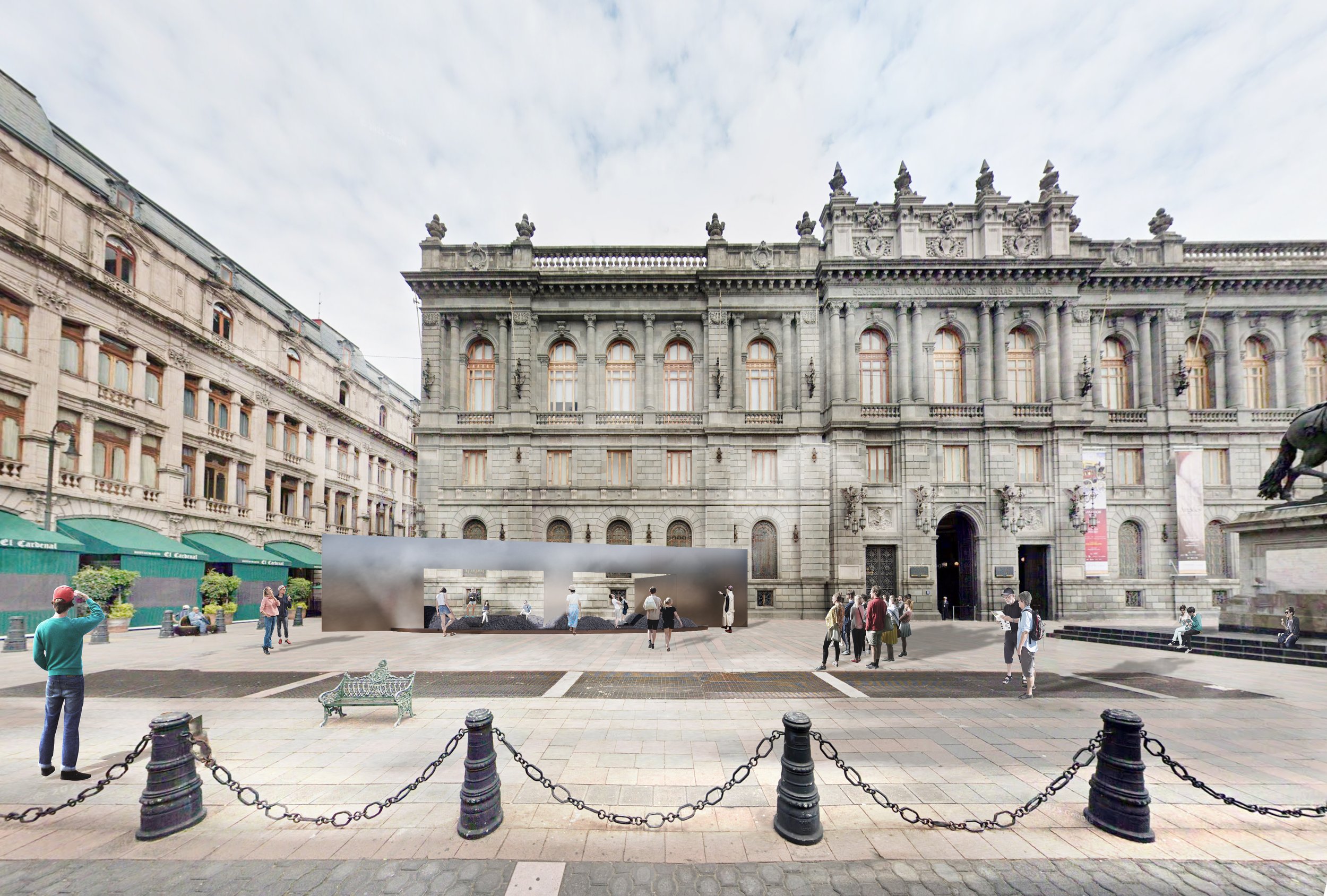
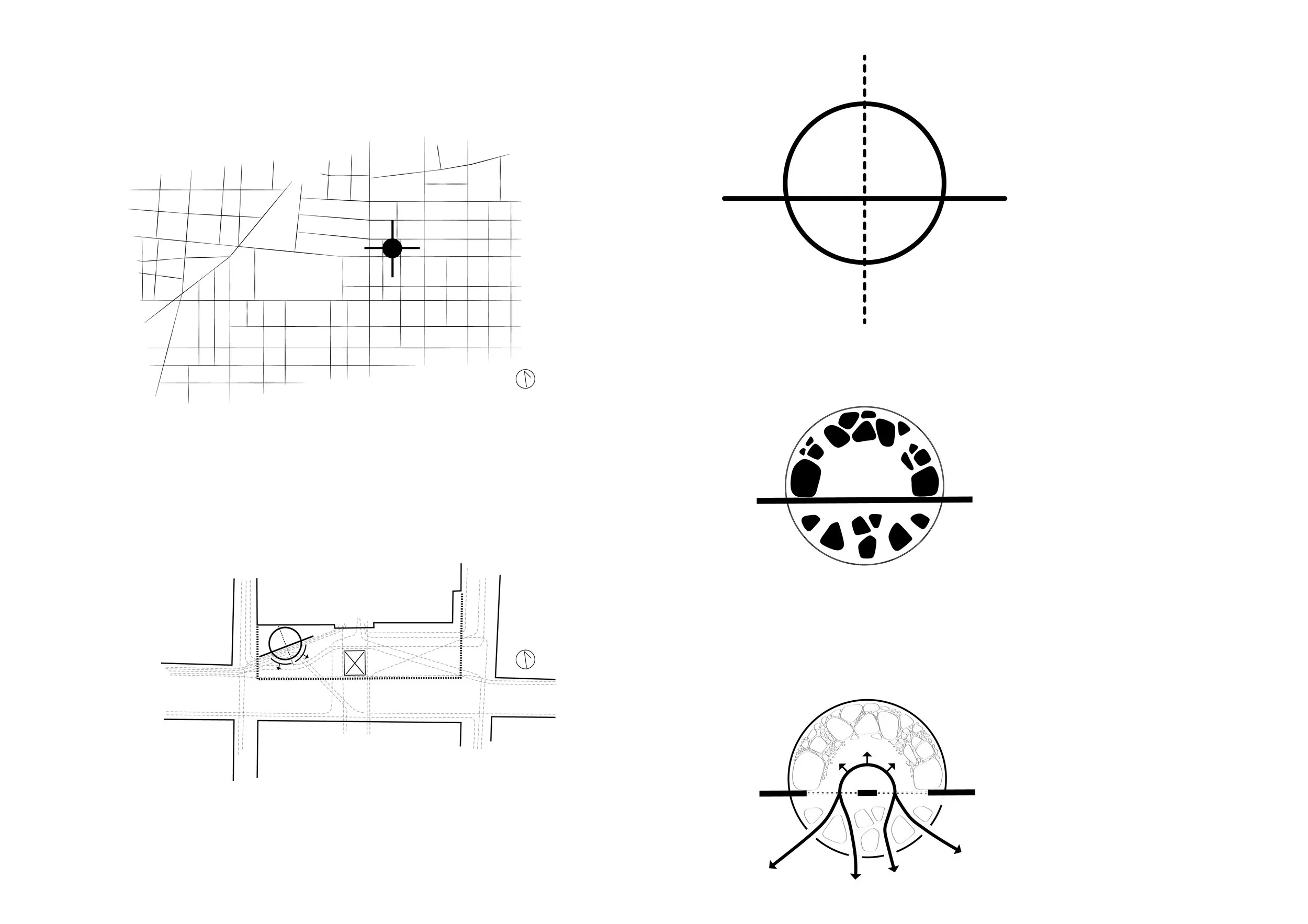
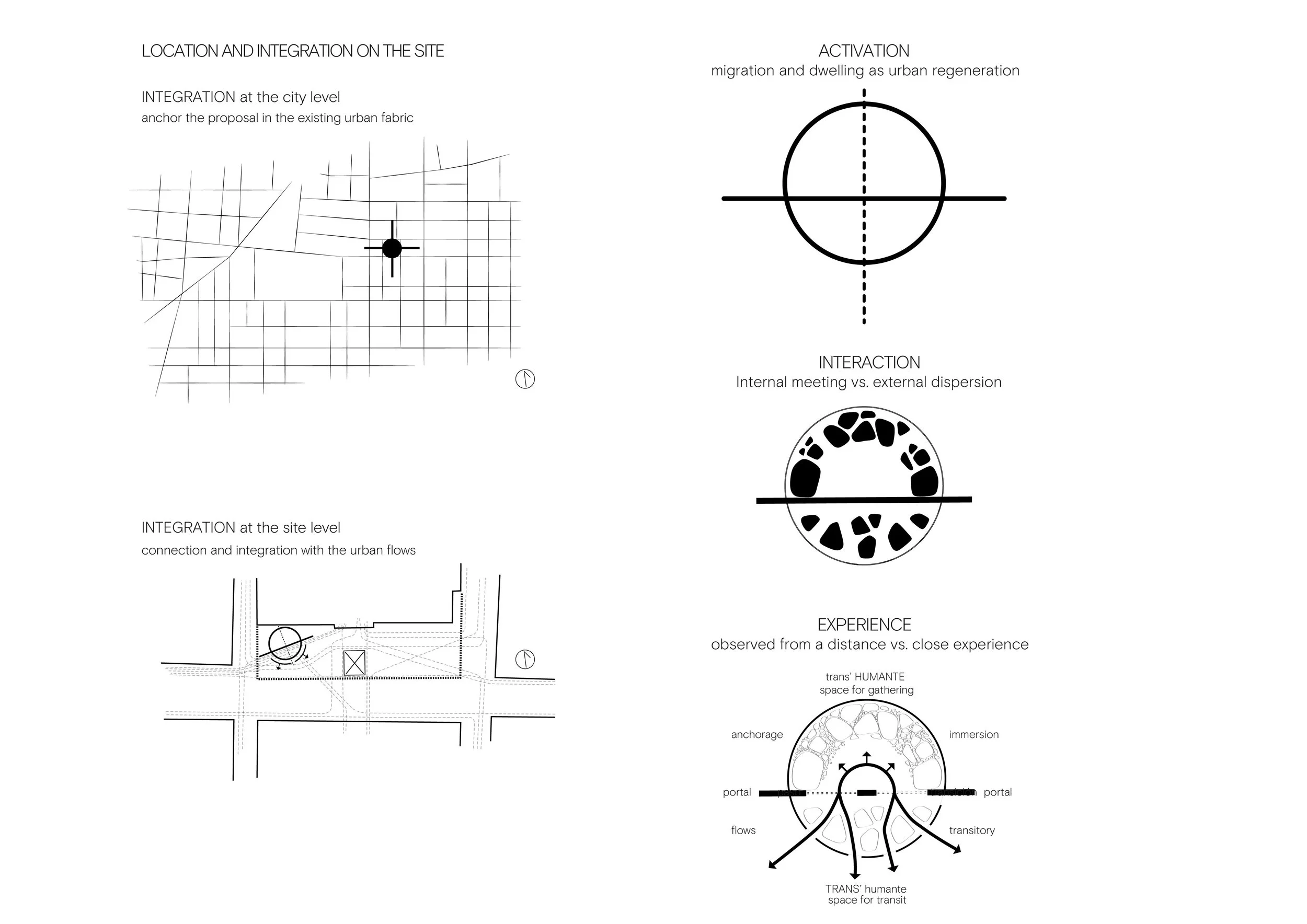
SPACE DESIGN & EXPERIENCE | The pavilion operates simultaneously as portal, garden, gathering space, and transit corridor. Two stone masses flank a central passage, creating threshold conditions that frame movement through the Alameda. Static activation pulls visitors into an interior landscape of tezontle and basalt; dynamic activation channels the flows of the plaza through and around the structure. The volcanic mass regulates the microclimate — cooling the air, dampening urban noise, slowing the loss of rainwater. Those who enter are modified by what they find; the place is modified by those who arrive. Migrating here means not just moving, but exchanging.
ARCHITECTURE | The pavilion measures 18.3 × 13.6 m, with a clear interior height of 3.7 m. Its form is organized around a horseshoe plan — open to the existing urban flows of the Alameda while creating an enclosed garden interior. The steel frame reads as a neutral skeleton: PTR 4"×4" vertical posts at 3 m intervals, horizontal angle sections at 1 m, and diagonal bracing in flat bar, all finished in matte black anticorrosive primer. Cold-rolled sheet metal cladding in caliber 18 bonds to the OSB substrate via MS-Polymer structural adhesive, producing a continuous matte surface that recedes before the geological presence of the stone.
CONSTRUCTIVE DETAIL | The section reveals a precise material logic built up from the ground: recycled SBR rubber roll (10 mm) protects the historic pavement below; a non-woven geotextile (300–400 g/m²) separates and shields against puncture and abrasion; a mixed-granulometry tezontle bed (15 cm total — 10 cm coarse base at 25–50 mm, 5 cm finish layer at 10–25 mm, apparent density ~1,000 kg/m³) forms the ground plane; and raw black basalt blocks (30–80 cm, ~2,900 kg/m³) are placed uncut, with live edges and visible extraction faces. The wall assembly — structural OSB 18 mm fixed with galvanized Z-clips, concealed self-drilling fasteners, and cold-rolled sheet metal skin — is fully reversible. Nothing is welded. Nothing is permanent.