REACTOR | Living Laboratory for Circular Transition
- reimagining industrial heritage through circular urban transformation -
Location: Brasov, Romania
Type: International competition entry - Urban regeneration proposal for the former Rulmentul industrial platform
Completion: September 2024-October 2024
Award: 1st Mention among 32 international entries
Role: External collaboration — Oana Paraschiv
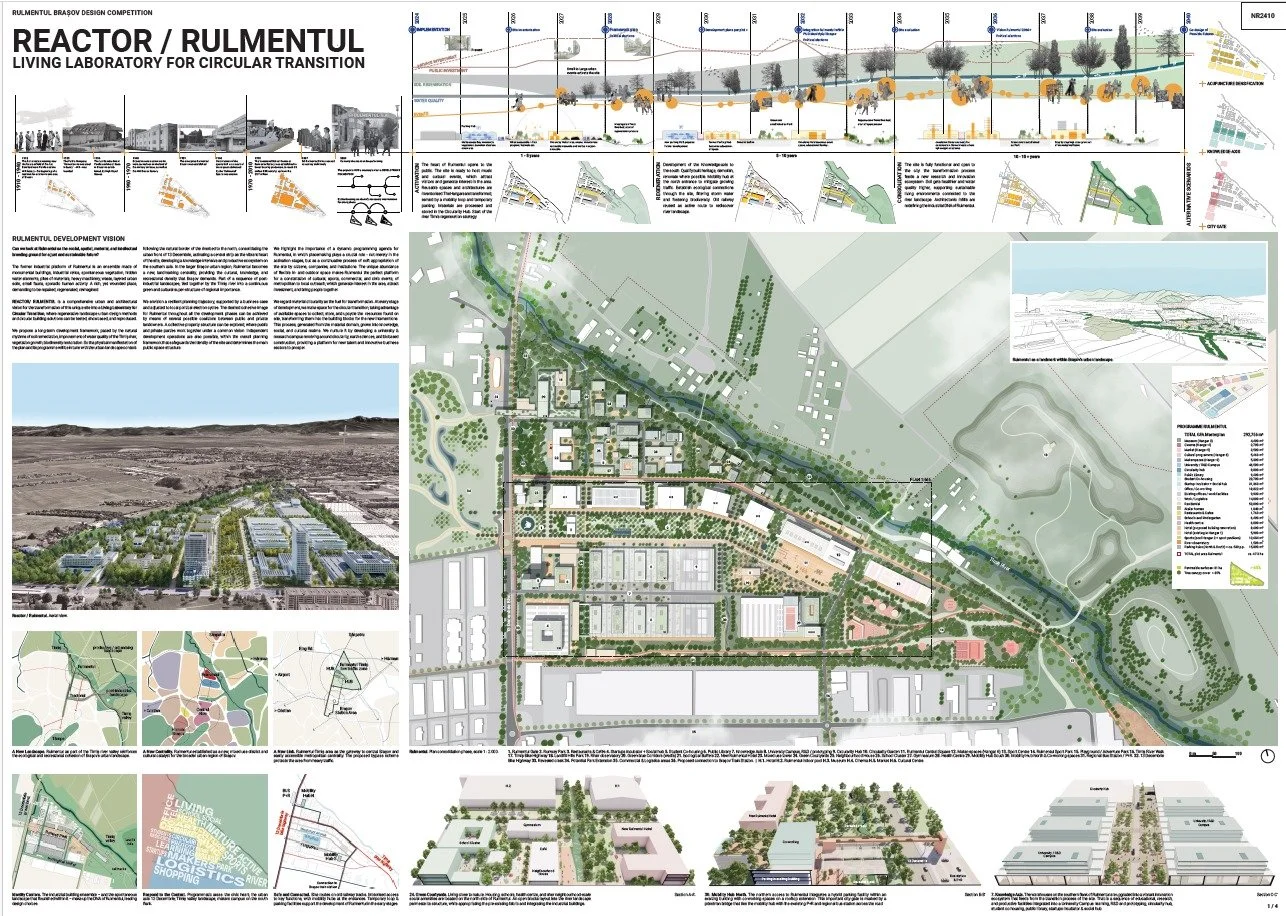
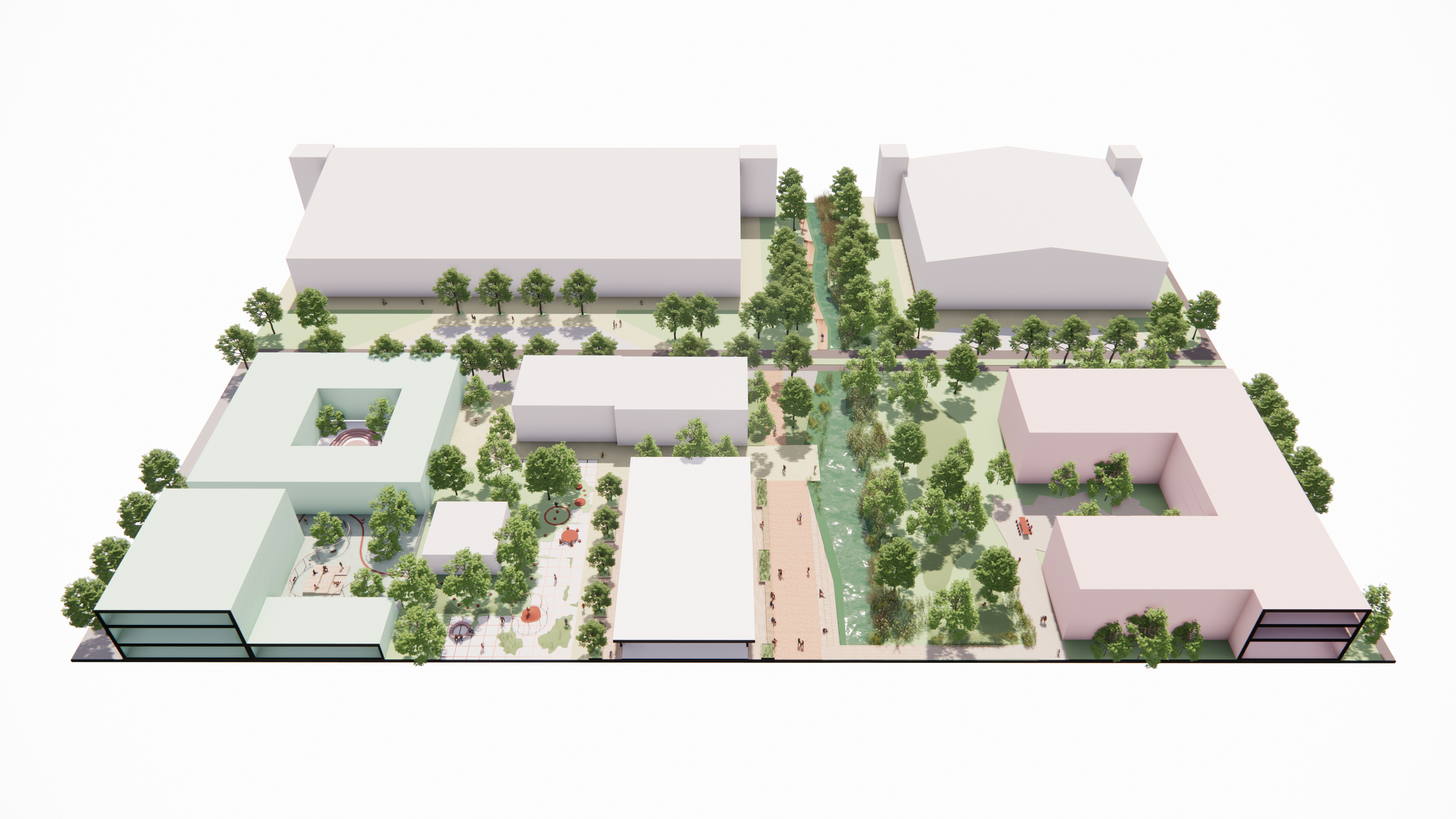
OVERVIEW | “REACTOR / RULMENTUL: Living Laboratory for Circular Transition” is an urban regeneration proposal developed for the transformation of the former Rulmentul industrial platform in Brașov. The project outlines a long-term ecological and social vision for one of Romania’s largest post-industrial sites, reframing it as a resilient and adaptive urban ecosystem.
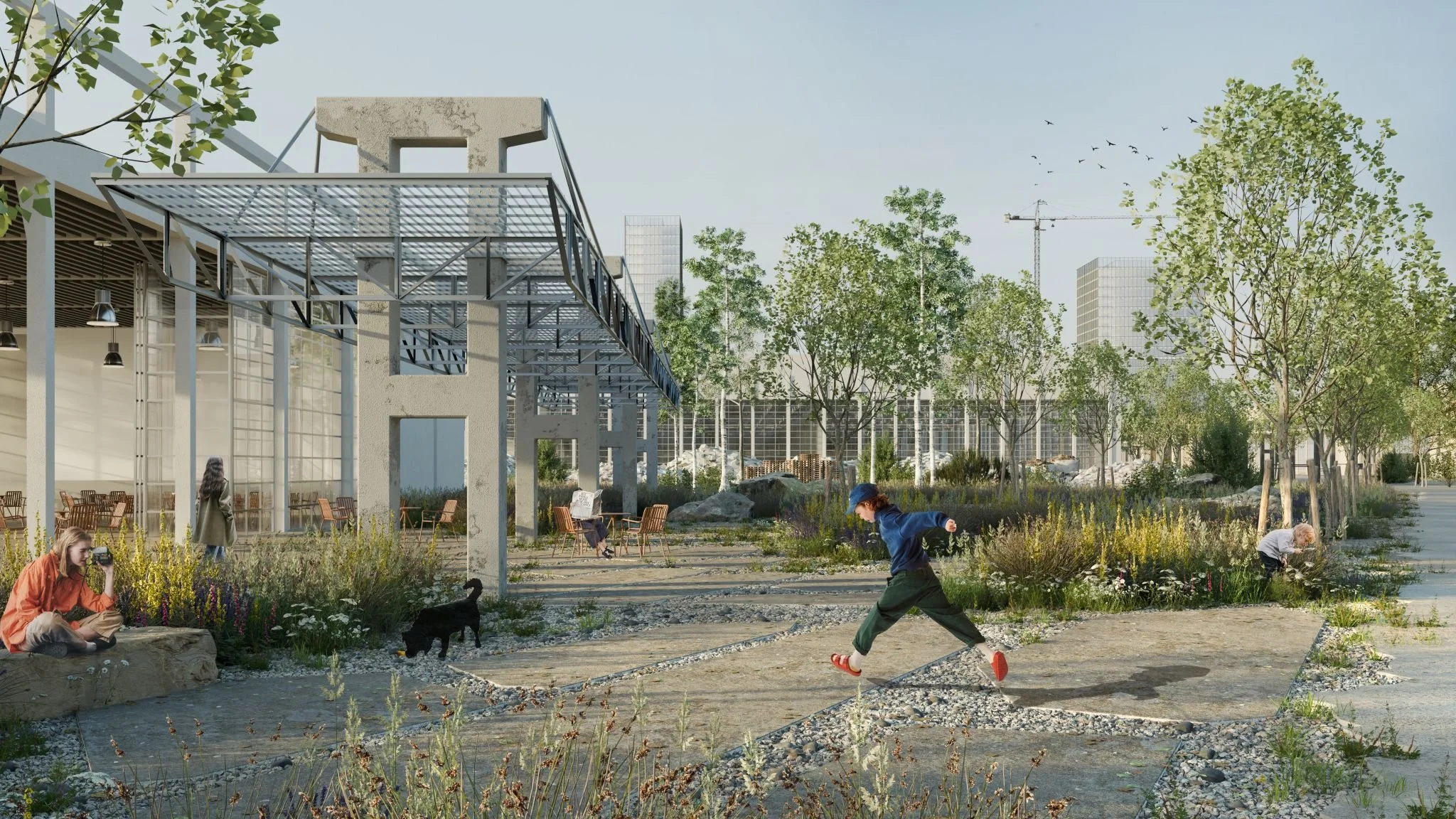
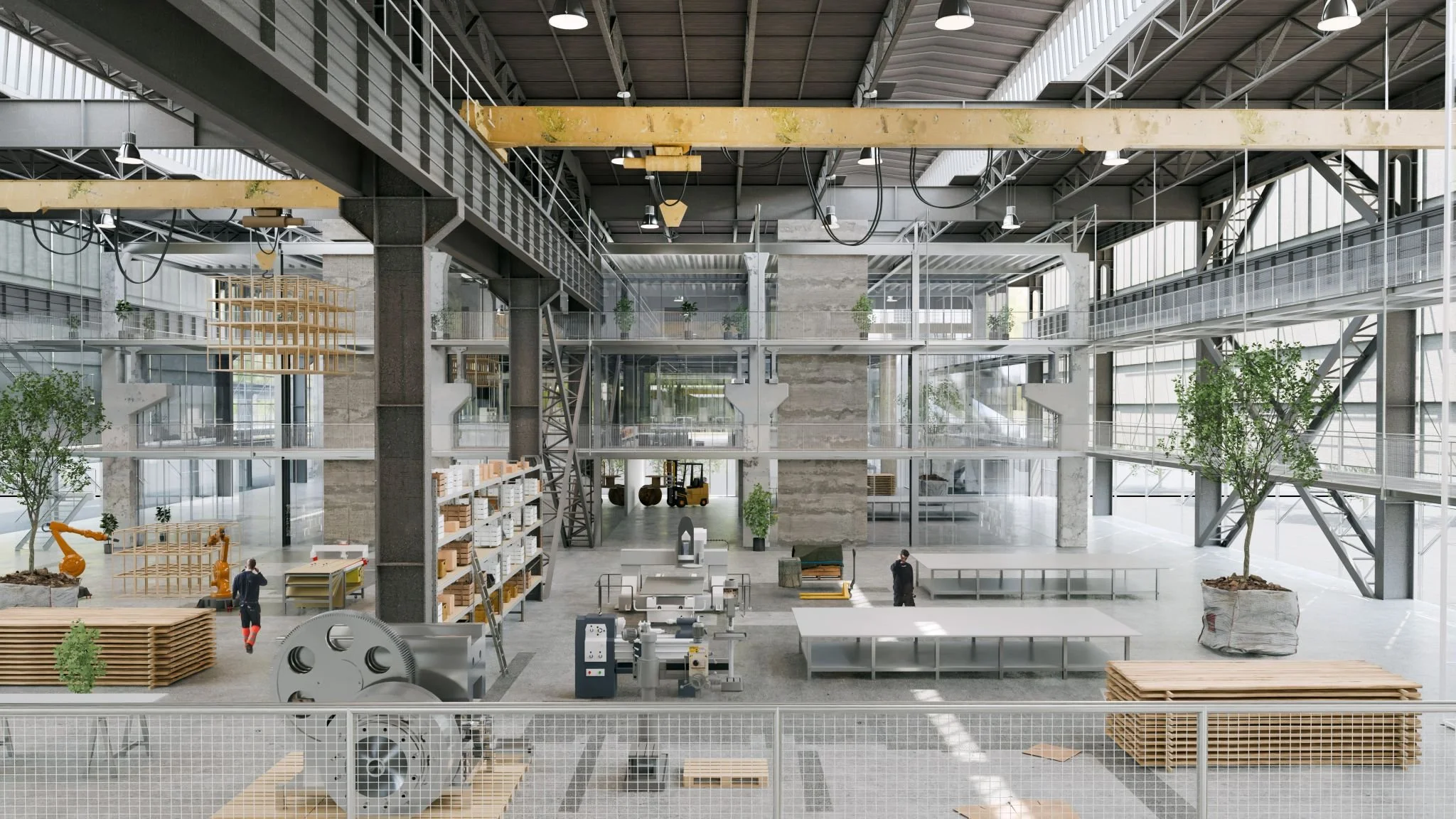
Instead of treating the site as a tabula rasa, the proposal builds upon its industrial identity, preserving spatial memory while introducing new ecological systems, productive landscapes and community-oriented urban structures. These elements reconnect the territory with its surrounding neighborhoods and the broader natural landscape.
At its core, the project defines the site as a “Living Laboratory”: an evolving urban framework that can continuously adapt over time while supporting ecological regeneration, sustainable development, social interaction and economic resilience.
CIRCULAR URBAN TRANSITION | The project is grounded in circularity understood not only as material reuse, but as a broader logic of spatial, ecological and social interdependence. It proposes an urban system where natural and built environments operate together in regenerative cycles.
The masterplan introduces a new balance between density and open space through the integration of green infrastructure, mixed-use urban clusters, productive landscapes and public spaces into a coherent territorial structure. Existing industrial traces are not removed, but reinterpreted as catalysts for transformation, allowing the memory of the site to remain active within its future development.
This circular framework supports low-impact urban living, strengthens biodiversity, improves climate resilience and embeds water-sensitive strategies across the entire site, establishing a forward-looking model for post-industrial regeneration in Romania.
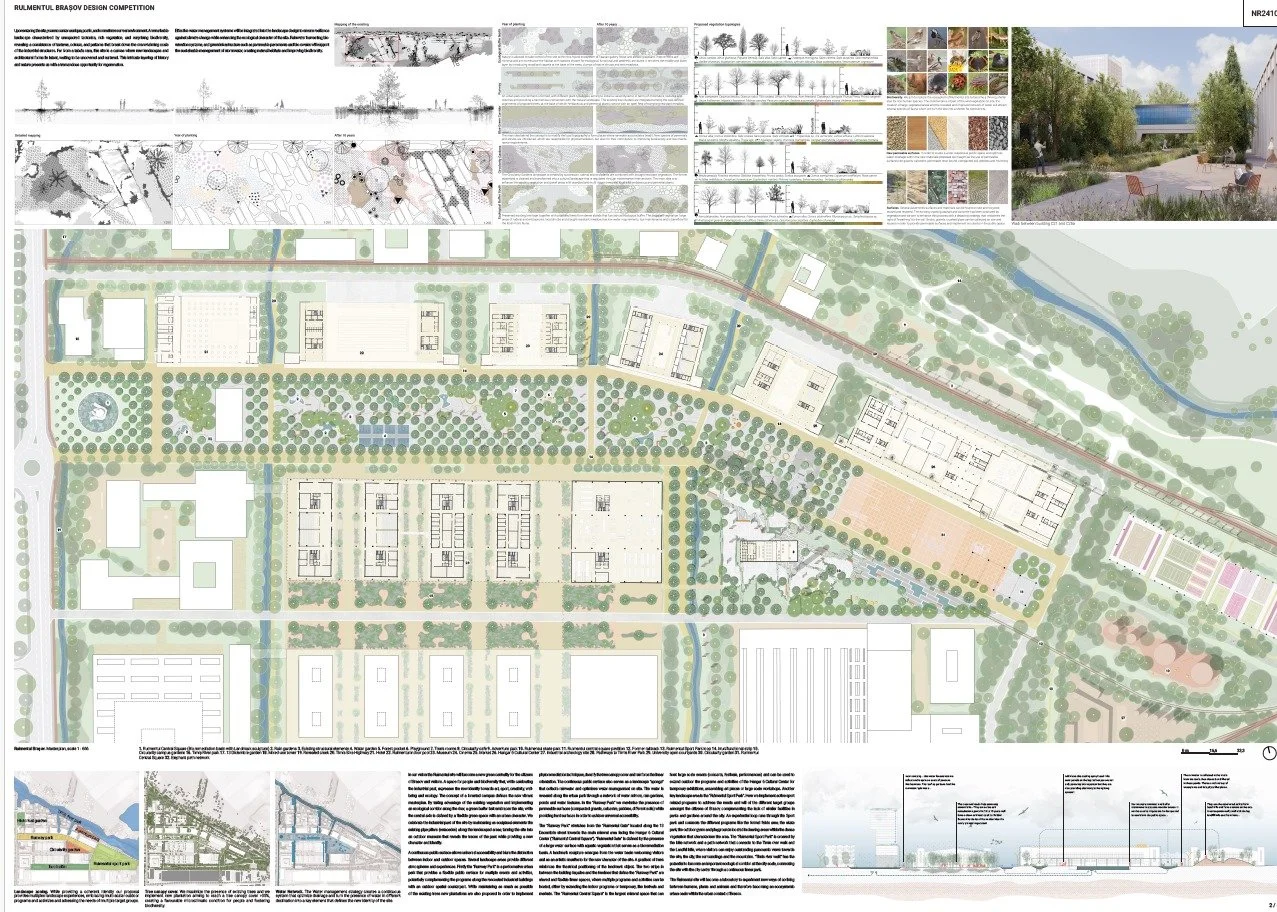
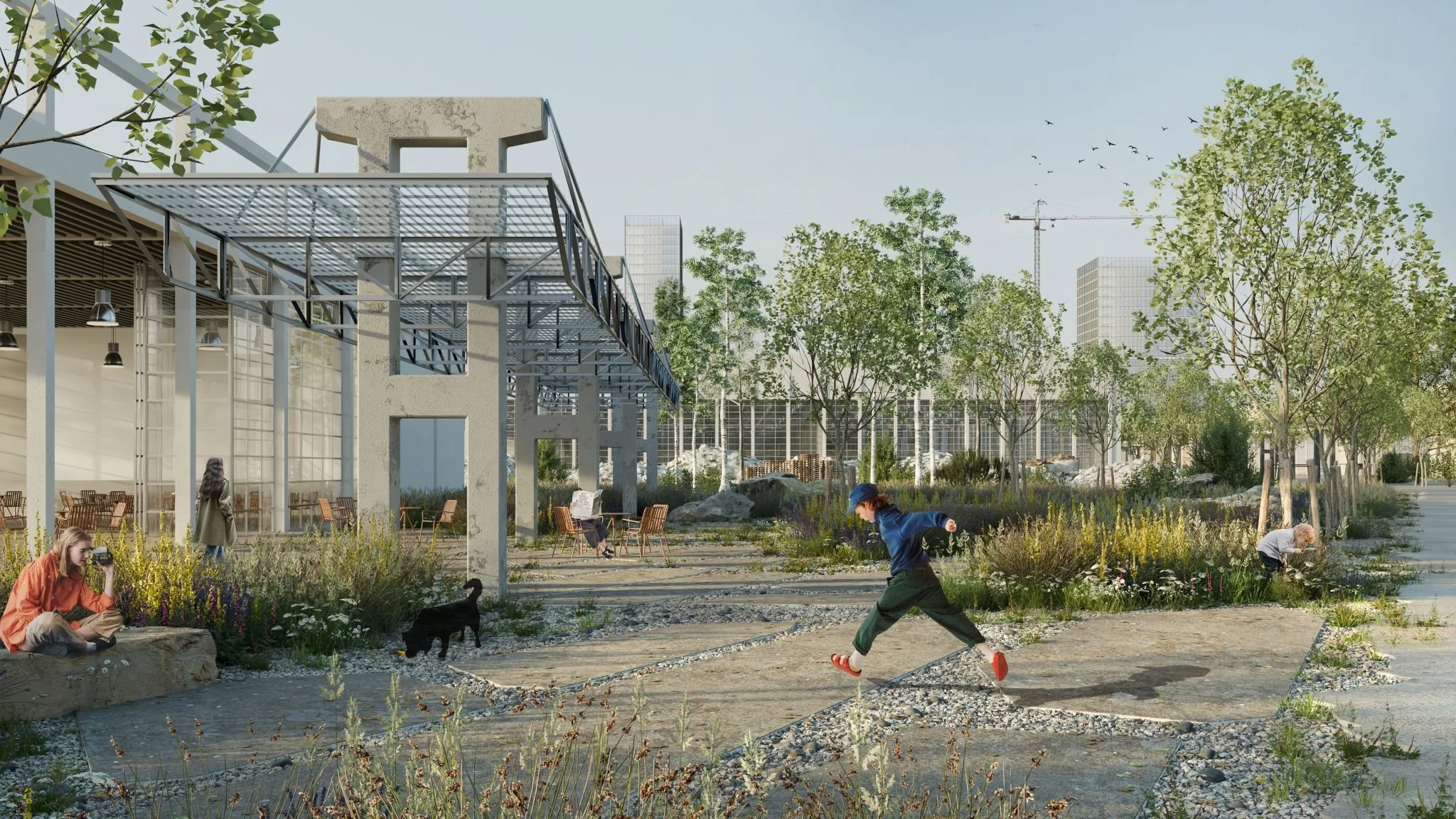
LANDSCAPE AS URBAN INFRASTRUCTURE | Landscape operates as the primary structuring system of the project. A continuous ecological corridor crosses the site, reconnecting fragmented natural systems while shaping a sequence of accessible public spaces.
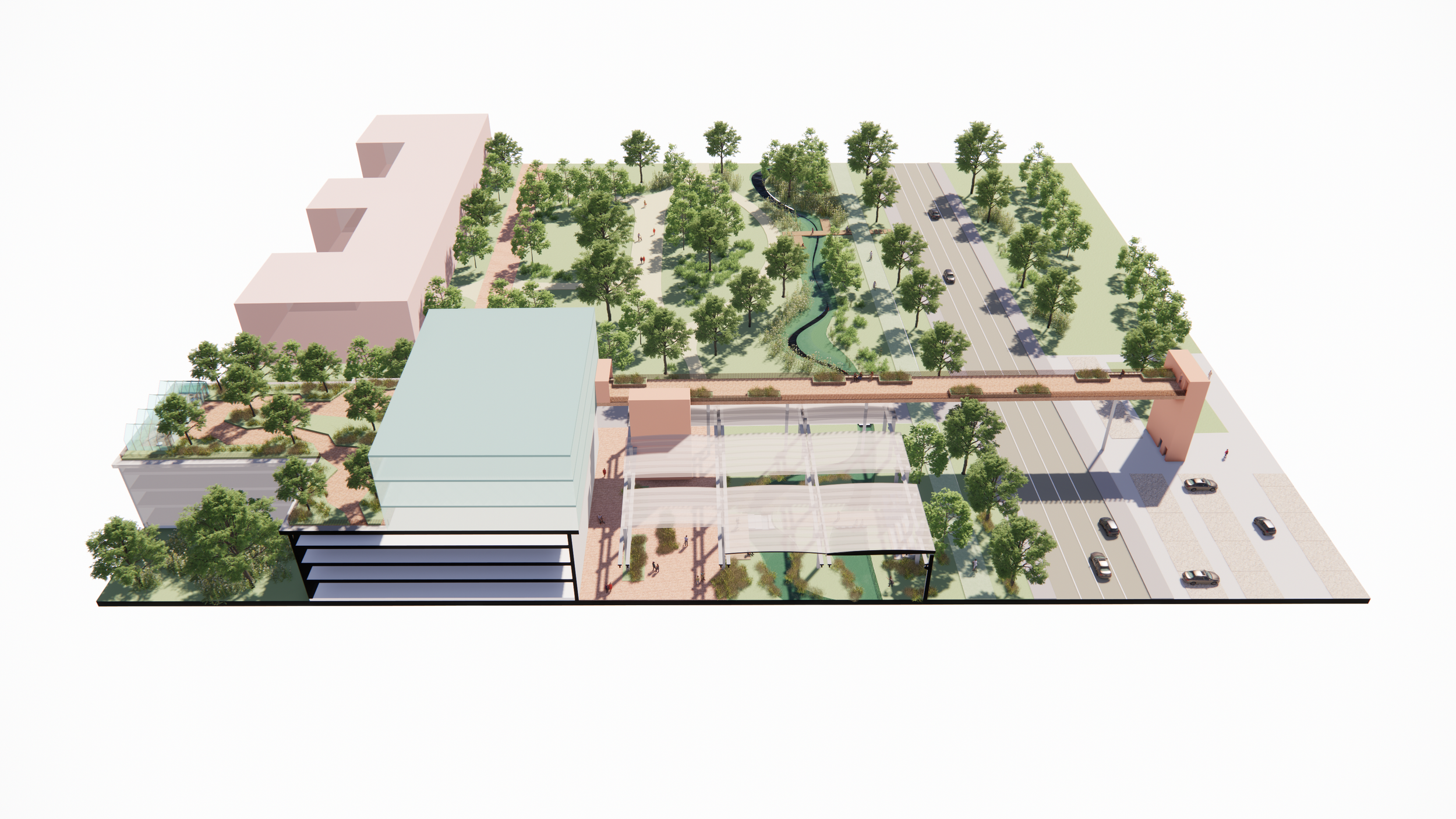
Water systems and existing wetlands are restored and reactivated as productive ecological infrastructures. They support stormwater management, biodiversity regeneration, urban cooling and long-term environmental resilience, while also becoming spatial and experiential elements of the public realm.
This landscape structure creates a gradual transition between urbanized areas and natural territories, allowing the site to function simultaneously as a living environment and a regenerative ecological system. Parks, green corridors, urban forests and productive landscapes form a connected network that enhances pedestrian and cycling mobility while integrating the district into the wider urban fabric of Brașov.
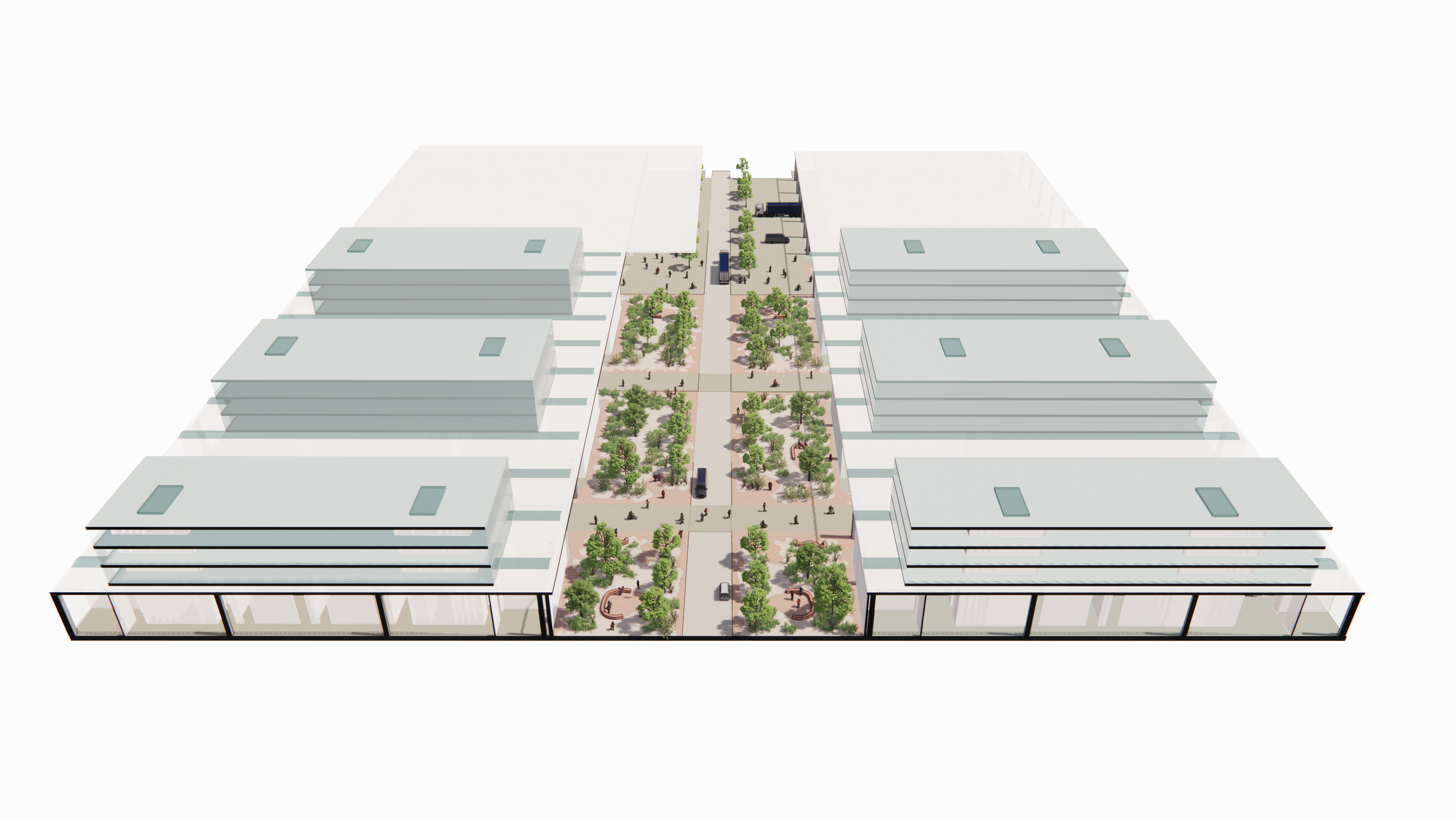
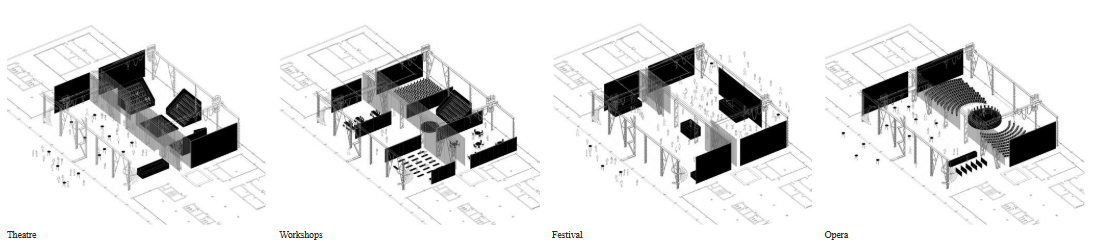
MIXED-USE URBAN FABRIC | The proposal introduces a series of mixed-use urban clusters organized around walkability, accessibility and collective life. Each cluster integrates housing, workplaces, education, cultural functions, recreation, commerce and public amenities within a human-scaled environment.
The spatial structure promotes compact urban development while maintaining generous public and green spaces. Ground floors remain active and porous, extending public life into courtyards, squares and shared landscapes. Community gardens, cultural spaces and flexible public areas reinforce social interaction and contribute to a strong local identity.
Rather than a fixed configuration, the urban fabric is designed as an adaptive system capable of evolving over time in response to shifting social, economic and environmental conditions.
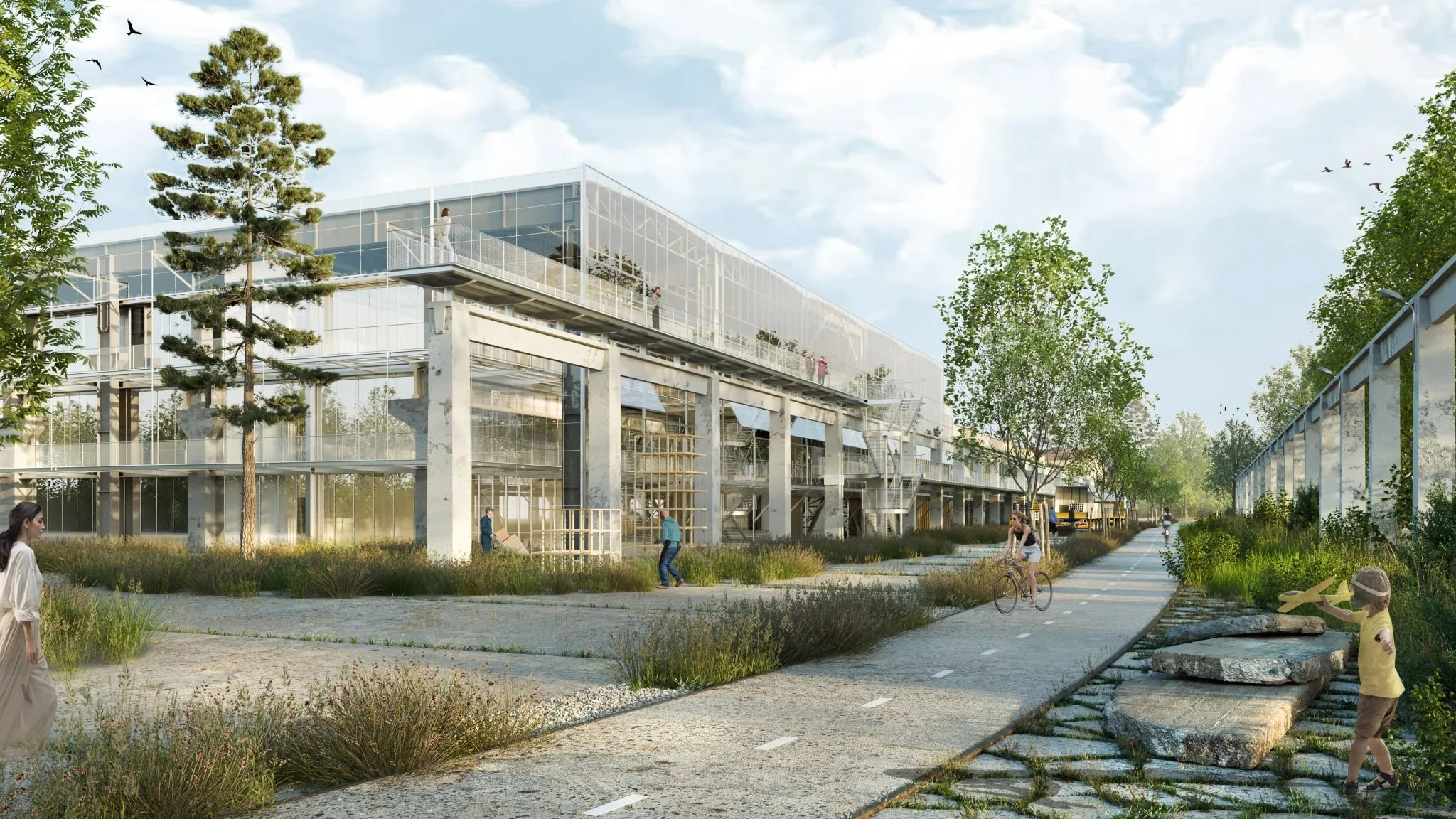
MOBILITY AND CONNECTIVITY | Mobility is redefined through a shift away from car-oriented infrastructure toward a system centered on walking, cycling and public transport integration. A network of green mobility corridors connects all urban clusters while ensuring continuity across public space and landscape systems.
Street hierarchies are simplified to prioritize soft mobility and ecological continuity. Reduced traffic intensity allows mobility spaces to function simultaneously as social and environmental infrastructure.
At the territorial scale, the former industrial platform is transformed from an isolated enclave into a fully integrated urban district, strengthening its connection to Brașov’s wider metropolitan structure.
ECOLOGY, REGENERATION AND RESILIENCE | Ecological regeneration is the foundation of the project. Nature-based solutions are integrated across all scales to restore biodiversity, enhance environmental performance and increase resilience to climate-related challenges.
Water-sensitive urban design strategies, ecological restoration processes, renewable energy integration, and sustainable land-use principles collectively reduce the environmental footprint of the development while improving the quality of the urban environment.
The district is envisioned as an evolving ecological system where urban development and natural processes coexist in continuous balance, reinforcing each other over time.
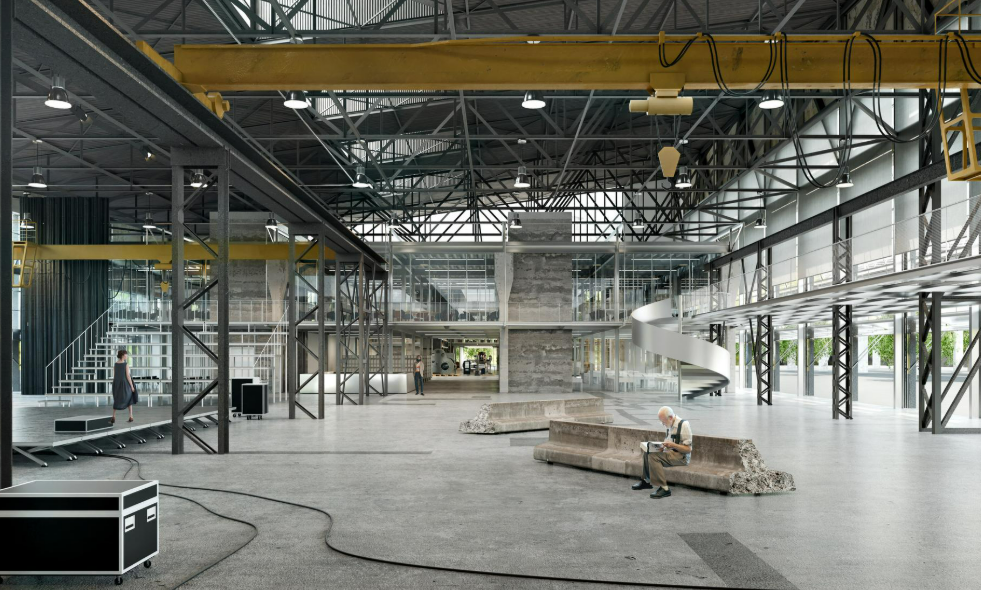
INDUSTRIAL MEMORY AND IDENTITY | Rather than erasing the industrial past, the project works with it as an active design resource. Existing industrial structures, infrastructural traces and spatial logics are preserved and reinterpreted as part of the new urban framework.
This creates a layered environment where industrial heritage, ecological systems, and contemporary urban life coexist. The identity of the site emerges from this overlap, allowing history to remain visible and operational within the future city.
TOWARDS A NEW URBAN ECOLOGY | The project proposes more than a redevelopment strategy; it introduces a framework for regenerative transformation of post-industrial landscapes.
By combining circular urban principles, ecological restoration, adaptive infrastructure, and community-oriented spatial systems, REACTOR / RULMENTUL outlines a model for future urban development capable of responding to environmental challenges while supporting collective well-being.
It contributes to broader discussions on circular economies, industrial heritage, landscape-driven urbanism and resilient territorial systems, positioning the site as a living and adaptive urban ecology shaped over time.
COLLABORATIVE FRAMEWORK |
“REACTOR / RULMENTUL: Living Laboratory for Circular Transition” was developed through an international multidisciplinary collaboration involving architects, urban designers, landscape architects, and researchers.
Main team: NEW ENVIRONMENTS — Giacomo Gallo, Robert Younger; ATELIER MASS — Silviu Aldea, Camelia Sisak, Tamás Sisak.
Co-authors: SAH — Ana Horhat; BLU.works — Jacopo Gennari Feslikenian.
External/Speciality collaboration: Teodora Constantinescu, Oana-Maria Paraschiv, Bogdan Simionescu, Felicia Radoviciu, Teodora Pascu, Ivona Izvinti-Nichita
For more details, check the entry from NEW ENVIRONMENTS - https://newenvironments.eu/Rulmentul